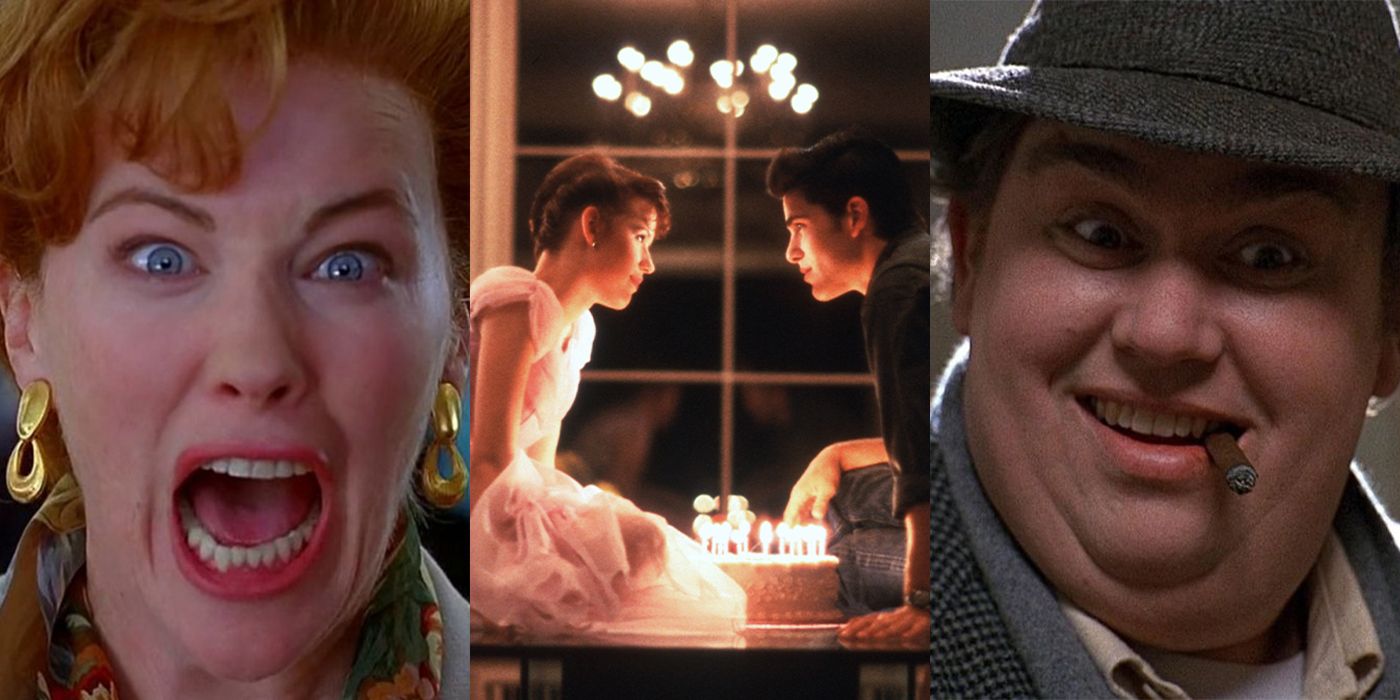
John Hughes didn't just make movies. He basically built a map of the teenage soul and color-coded it with neon and New Wave synth. If you grew up in the 80s, his films were your Bible. If you’re a Gen Z or Gen Alpha kid discovering them on a flight or a streaming deep-dive, you’ve probably realized something weird: despite the rotary phones and the "vintage" hair, the feeling is exactly the same.
Honestly, it’s rare for a director to own a decade as completely as Hughes owned the 1980s. But here’s the thing—most people forget he only actually directed eight movies. That's it. Eight. People often credit him with Pretty in Pink or Home Alone (which he wrote and produced), but the ones where he actually sat in the big chair have a specific, raw energy you don’t find elsewhere.
The Eight Films That Defined the Hughesverse
When you look at the movies directed by John Hughes, you aren't just looking at a list of comedies. You're looking at the evolution of a man who moved from teenage angst to the messy, hilarious reality of being an adult.
- Sixteen Candles (1984): The debut. It’s funny, it’s cringey, and yeah, parts of it—like the Long Duk Dong character—have aged like milk in the sun. But the core? That feeling of your family totally forgetting your 16th birthday while you pine for a guy who doesn't know you exist? That’s universal.
- The Breakfast Club (1985): Five kids in a library. That’s the whole movie. It shouldn't work, but it’s arguably the most important teen film ever made. It broke the "jock" and "nerd" stereotypes by showing they all hated their parents and themselves in equal measure.
- Weird Science (1985): A total pivot into sci-fi lunacy. Two geeks make a "perfect woman" on a computer. It's ridiculous, but it gave us a young Robert Downey Jr. and a lot of heart hidden under the slapstick.
- Ferris Bueller’s Day Off (1986): The ultimate "cool" movie. Ferris is the guy we all wanted to be, but Cameron is the guy we actually were. It’s a love letter to Chicago and the idea that life moves pretty fast.
- Planes, Trains and Automobiles (1987): Hughes finally grows up. This is his masterpiece. Steve Martin and John Candy are a perfect, tragicomic duo. If the ending doesn’t make you cry, you might be a robot.
- She’s Having a Baby (1988): His most personal and underrated work. It’s basically an autobiography of his own early marriage and the terrifying transition into fatherhood.
- Uncle Buck (1989): John Candy at his absolute peak. It’s the bridge between his teen movies and his later "family" era.
- Curly Sue (1991): His final directorial effort. It’s a bit more sentimental and "Disney-fied" than his earlier work, but it showed his shift toward wanting to protect childhood innocence.
Why Shermer, Illinois is a State of Mind
Almost all of these stories happen in the fictional town of Shermer. Hughes actually based it on his own upbringing in Northbrook, Illinois (zip code 60062, which makes a cameo in The Breakfast Club). By keeping his stories in the suburbs, he made them feel safe and suffocating all at once.
He had this incredible knack for dialogue. He didn't write "at" kids; he wrote as if he was sitting in the back of the bus with them. He gave teenagers a level of respect that Hollywood usually reserved for war heroes. Their heartbreak wasn't "cute"—it was the end of the world.
The John Candy Connection
You can't talk about movies directed by John Hughes without mentioning John Candy. They were kindred spirits. Hughes saw the sadness behind Candy’s smile and used it to ground his comedies. In Planes, Trains and Automobiles, when Candy’s character, Del Griffith, says, "I’m a shopper. I like to shop," it’s funny. But when he admits he hasn't been home in years? That’s the Hughes magic. He found the lonely heart in the loudest room.
The Problematic Parts We Can't Ignore
Look, it’s 2026. We have to be real about the blind spots. Hughes’ world was very white, very middle-class, and often featured "jokes" that we now recognize as straight-up offensive. Sixteen Candles is the biggest offender here, between the racial caricatures and the casual handling of consent.
Critics like Molly Ringwald herself have written about how difficult it is to reconcile the genius of the films with the parts that hurt to watch now. It’s okay to love these movies while acknowledging they were products of a very specific, limited perspective. They aren't perfect, but they are honest about the era they came from.
Impact on Modern Cinema
Every "coming-of-age" movie you’ve seen in the last twenty years owes a debt to Hughes. The Edge of Seventeen, Lady Bird, and even shows like Stranger Things are basically playing in his sandbox. He proved that you don't need a huge explosion to have stakes. A girl waiting for a phone call is a high-stakes thriller if you frame it right.
Actionable Ways to Experience the Hughesverse Today:
- Watch the "John Hughes Edit": If you're a fan of Planes, Trains and Automobiles, look for the stories about the original three-hour cut. While it’s never been fully released, the 4K Criterion Collection release features a ton of deleted scenes that show the darker, more dramatic version Hughes originally intended.
- The Chicago Tour: If you’re ever in Illinois, you can actually visit the Home Alone house in Winnetka or the "Save Ferris" water tower in Northbrook. Most of the high school scenes in his movies were shot at New Trier High School or Maine North High School.
- Soundtrack Diving: Don't just watch the movies. Listen to the music. Hughes was obsessed with British New Wave. He hand-picked tracks from bands like The Psychedelic Furs and Simple Minds, often before they were famous in the States.
The reason we’re still talking about movies directed by John Hughes decades later is simple: he remembered what it felt like to be invisible. Whether you're a "brain," an "athlete," a "basket case," a "princess," or a "criminal," he made sure you knew you weren't alone in that library.
To truly understand his legacy, watch Planes, Trains and Automobiles and The Breakfast Club back-to-back. You'll see the full arc of a director who realized that whether you're sixteen or forty-six, we're all just trying to find our way home.